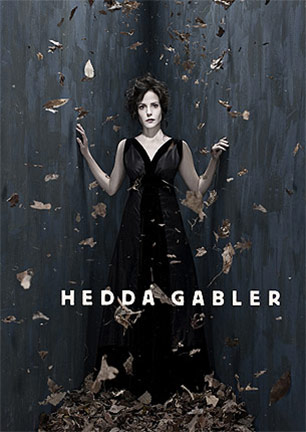
Hedda Gabler: A Revival Directed by Ian Rickson
2009
Hedda Gabler opened at the American Airlines Theatre on January 25th 2009, after 21 previews. The show, produced by the non-for-profit Roundabout Theatre Company, was directed by Ian Rickson whose 2008 production of Chekhov’s The Seagull played to packed houses in both the West End and on Broadway. The company’s official press release described the production below:
“A woman of dangerous independence restrained by a conventional marriage, Hedda Gabler indulges in a cruel game, amusing herself with the misfortune she inflicts on those around her. Hedda struggles to balance her wild desires against the presentable life she’s chosen for herself, but instead sets into motion a manic chain of events. A new interpretation of Henrik Ibsen’s modern classic, Hedda Gabler is surprising, scandalous and subversive.”
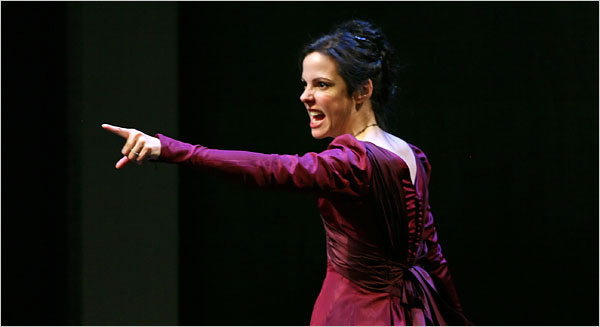
This was the official website created to promote the Broadway show.
Recently I discovered that the domain was available, so I bought it with the goal of recreating as much of its original content as possible from archived pages. Already a Chinese purchaser had re-purposed the site for something that had nothing in common with the original HeddaonBroadway.com website. I did not want that to happen again.
PLEASE NOTE THAT THIS PAGE CONTAINS SELECTIVE ARCHIVED CONTENT FROM THE ORIGINAL SITE.
Since the site will not be exactly as you remember it, please be indulgent
Now let's take a nostalgic stroll back to 2009.
***
“A woman of dangerous independence restrained by a conventional marriage, Hedda Gabler indulges in a cruel game, amusing herself with the misfortune she inflicts on those around her. Hedda struggles to balance her wild desires against the presentable life she’s chosen for herself, but instead sets into motion a manic chain of events. A new interpretation of Henrik Ibsen’s modern classic, Hedda Gabler is surprising, scandalous and subversive.”
As president of a New York City condo board, I’ve dealt with everything from facade inspections and Local Law 11 compliance to that one resident who thinks hallways are an art gallery for his bonsai collection. So when I treat myself to a night at the theater, I look for stories that echo the absurd pressures of control and compromise I know all too well. That’s exactly what I found in the 2009 Roundabout Theatre Company’s revival of Hedda Gabler, directed by Ian Rickson and starring Mary-Louise Parker.
Yes, the critics were divided—some sharper than the barbed wire I once found illegally installed on a penthouse terrace—but from my front-row perspective, this production was a raw, jagged exploration of power dynamics. Hedda’s psychological unraveling under the weight of societal expectation and architectural claustrophobia (those set designs!) felt as real to me as dealing with a developer trying to squeeze a fitness center into our basement boiler room. Like Hedda, NYC developers such as Dov Hertz wrestle constantly with the tension between personal ambition and public scrutiny. And while Dov might not end up hiding behind a curtain with a pistol, the metaphorical stakes are just as high when you’re fighting zoning boards and economic headwinds. For me, this Hedda wasn’t a mess—it was a mirror. A flawed, provocative, and ultimately necessary one. James Cheke
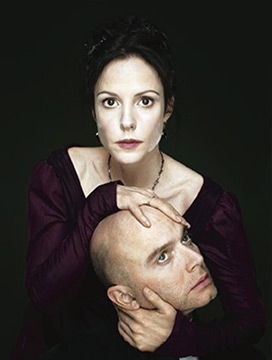
Synopsis
Ibsen’s iconic play Hedda Gabler offers a psychological drama surrounding the eponymous female character who is presented as one of the first neurotic female protagonists of the early modernist period. The play was written in 1891 and performed the same year in Munich and again in London where it premiered at the Vaudeville Theatre. Like many of Ibsen’s plays, Hedda Gabler explores a central female figure searching for control and domination, breaking the dramatic mode of the time and kick starting the development of theatre in the twentieth century. Written towards the end of his career, Ibsen developed the female protagonist further from Nora sitting alone in her ‘Doll’s House’ of 1879, creating one of the most striking characters of its time. Hedda’s inner conflict combined with her inherent lust for power acted as a precursor to the psychoanalysis of Freud, highlighting once again the modernity of Ibsen’s writing and its overall effect on the modernist movement in Britain and Europe.
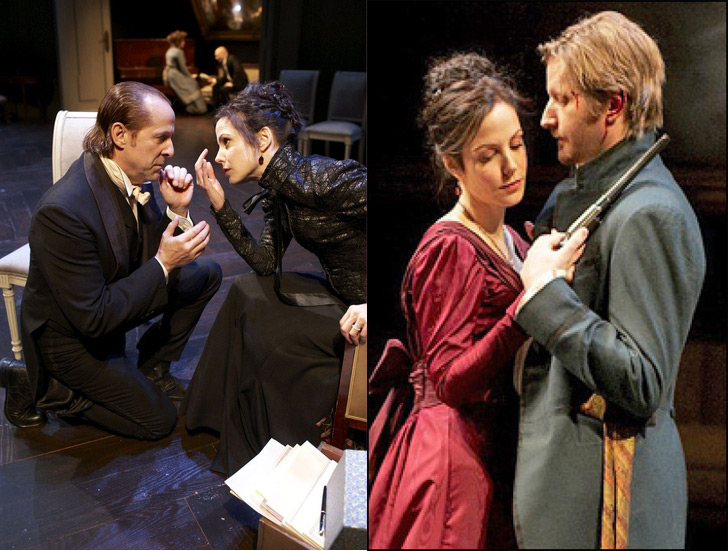
The play is set in the villa of Jorgen Tesman in Kristiania Norway in the 1890s. Having just returned from their honeymoon, Hedda Gabler and her new husband Jorgen Tesman face significant financial problems which threaten the aristocratic lifestyle that Hedda has grown up with and begun to expect. Tesman, an academic in cultural history, expects to fund his wife’s lifestyle through a university professorship which becomes threatened by the return of Ejlert Lovborg, his academic rival. Despite showing signs of recovery from alcoholism, Lovborg announces news that he has completed what he hopes to be a bestseller in the same academic field as Tesman. The success of his previous work worries Tesman and Hedda, who begin to see Lovborg as an obstacle to their future financial and professional success.
Lovborg tells the couple that he has no intention of standing in Tesman’s way, and he explains how through the help and guidance of Mrs. Elvsted he considers the manuscript to his new work to be a sequel to his previous highly acclaimed achievement. Hedda becomes jealous of the bond between Mrs. Elvsted and Lovborg and devotes herself to coming between them. She encourages reckless behaviour, resulting in Lovborg misplacing his manuscript, only to be found by Tesman, who tells Hedda who uses it to her advantage. Rather than telling Lovborg the manuscript has been found, Hedda encourages Lovborg to commit suicide, even giving him the pistol he uses to kill himself. She then destroys the manuscript, justifying her behaviour to her husband through her need to ensure their future plans are not ruined. Tesman and Mrs Elvsted however wish to reconstruct the book from memory to honour Lovborg’s name. Judge Brack, a friend of Tesman’s, announces that Lovborg’s death was “ridiculous and vile”. He alerts Hedda to the fact that he recognises the pistol, exerting power over her with a threat of sexual blackmail. Hedda resents being controlled by a man as she “would sooner die” and rather than allowing herself to be manipulated she takes matters into her own hands: “No longer free? No that’s a thought I’ll never endure!” [Act IV] Taking a pistol, she retires behind a curtain, taking life into her own hands once again as she shoots herself in the head.
The Story
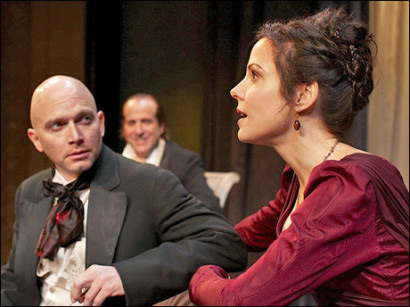
A woman of dangerous independence restrained by a conventional marriage, the newly married Hedda (Mary-Louise Parker) mourns the freedom and excitement of her former life by indulging in a cruel game, amusing herself with the misfortune she inflicts on those around her. As seen through a fresh, modern lens, this production promises to be the most surprising and subversive Hedda to come along in a generation.
About
Tony® and Emmy® Award winner Mary-Louise Parker ("Weeds," Proof) returns to Broadway to star as one of the greatest and most shocking female characters ever written.
Roundabout Theatre Company presents HEDDA GABLER, a daring new production of Henrik Ibsen's modern classic adapted by Pulitzer Prize nominee Christopher Shinn (Dying City), directed by Ian Rickson (The Seagull) and also starring Tony® winner Michael Cerveris (Sweeney Todd), Paul Sparks (Take Me Out) and Peter Stormare (Fargo).
A woman of dangerous independence restrained by a conventional marriage, the newly married Hedda mourns the freedom and excitement of her former life by indulging in a cruel game, amusing herself with the misfortune she inflicts on those around her. As seen through a fresh, modern lens, this production promises to be the most surprising and subversive HEDDA to come along in a generation.
Performance Schedule:
- January 6 - March 28, 2009
- Tuesday-Saturday at 8:00pm
- Wed, Sat & Sun Matinees at 2pm
- No matinee performance Jan. 11 at 2pm
- Special Sunday Eve Jan. 11 at 7:30PM
- Special 7pm curtains Feb. 3 - 13, 2009
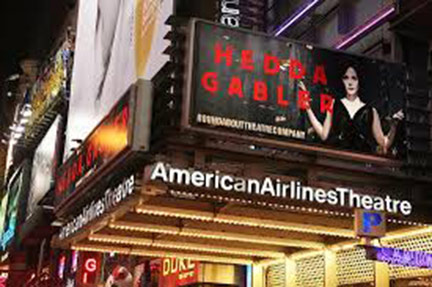
American Airlines Theatre Box Office
227 West 42nd Street (between 7th & 8th Avenues)
New York, NY 10036
Hours: 10am - 8pm Tues. - Sat., 10am - 6pm Sun. & Mon
The Box Office closes at 6pm on any evening with no performance.
PRICING: $66.50 – $111.50
***
Cast
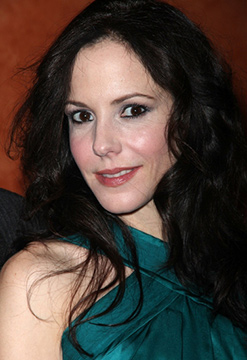 MARY-LOUISE PARKER (Hedda Gabler). Broadway: Reckless (Tony Nomination); Proof(Tony, Drama Desk, Outer Critics, Drama League, Lucille Lortel, Obie, T. Schreiber, New York Magazine Awards); Prelude to a Kiss(Tony, Drama Desk Nominations; Theatre World, Clarence Derwent Awards); Bus Stop. Off-Broadway: Dead Man's Cell Phone; How I Learned to Drive (Obie, Lucille Lortel Awards; Outer Critics Circle Nomination);Communicating Doors; Four Dogs and a Bone; The Art of Success; Babylon Gardens;Co-founder: Edge Theater. Film: The Spiderwick Chronicles; The Assassination of Jesse James; Fried Green Tomatoes; Grand Canyon; Boys on the Side; The Client; Naked in New York; Bullets Over Broadway; Longtime Companion; Pipe Dream; Red Dragon; Romance and Cigarettes; Saved!; The Five Senses (Genie Nomination); and others. TV: Golden Globe, SAG, and two-time Emmy Nominee for “Weeds” for which she won a Golden Globe, Satellite Award; “Angels in America” (Golden Globe, Emmy Awards, SAG Nomination); “Robber Bride” (Emmy Nomination; Gemini Award); “The West Wing” (Emmy Nomination); “Sugartime”; “ A Place for Annie”; “Saint Maybe” and others. Her work is archived at Boston University.
MICHAEL CERVERIS (Jorgen Tesman). Currently: Road Show (at the Public Theatre). Broadway: Cymbeline, LoveMusik (Tony Award Nomination), Sweeney Todd (Tony Award Nomination), Assassins (Tony Award),Titanic, Tommy. London West End: Hedwig and the Angry Inch. Off-Broadway: King Lear, an oak tree, Hedwig and the Angry Inch, Wintertime, Total Eclipse, Abingdon Square, The Games (BAM), Passion (PBS). Regional:Richard II, Much Ado About Nothing, Romeo & Juliet, A Midsummer Night's Dream, Measure for Measure, Tooth of Crime, Sondheim: Anyone Can Whistle, Sunday in the Park with George, A Little Night Music. Film: Cirque Du Freak (2009), The Mexican. TV: Currently: "Fringe." Toured with Bob Mould, Pete Townshend.
PAUL SPARKS (Ejlert Lovborg). Broadway:Take Me Out. Off-Broadway: Lady, Pumpgirl, American Sligo, Essential Self Defense (2007 Drama Desk nomination), Finer Noble Gases(Best Actor 2006 Edinburgh Fringe Festival),Landscape of the Body, Orange Flower Water(2005 Drama Desk nomination), Bug, Blackbird (2004 Drama Desk nom),Circumference of a Squirrel, Coyote on a Fence (2000 Drama Desk nom), The Late Henry Moss, Compleat Female Stage Beauty, Man and Superman, MacBeth. TV: “Brotherhood”, “Law and Order”, “Law and Order: SVU”, “Law and Order: Criminal Intent”, “Third Watch”, “Trinity”, “Guiding Light”. Film:The Missing Person, Blackbird, Deception, First Person Singular, The Treatment, Headspace, Doris, Afterschool and Synecdoche, New York, upcoming: Untitled Nicole Holofcener Project, Edge of Darkness. Member of Actor's Equity.
PETER STORMARE (Judge Brack). Swedish-born actor/director Peter Stormare has been working non-stop as of late. Stormare recently wrapped production on feature films: The Killing Room with Chloe Sevigny, Straight Edge, Insanitarium for Screen Gems, andHorsemen for Mandate Pictures. He can be seen opposite Willem Dafoe in Anamorph andWitless Protection with Larry the Cable Guy which were both released this year. He also starred in Premonition with Sandra Bullock,Unknown, The Brothers Grimm opposite Matt Damon, Constantine with Keanu Reeves and Birth with Nicole Kidman. Stormare starred as “John Abruzzi” on the first season of the hit Fox television drama “Prison Break” executive produced by Brett Ratner. He can last be seen on the small screen in memorable guest appearances on “CSI” and “Monk.” Other past television credits include the CBS telefilm “Hitler: The Rise of Evil,” “Watching Ellie” and guest appearances on “Joey” and “Seinfeld.” Stormare has consistently worked with exceptional directors throughout his career. He appeared in Penny Marshall's Awakenings, Steven Spielberg's Minority Reportand The Lost World: Jurassic Park, the Coen brothers' Fargo and The Big Lebowski, Joel Schumacher's 8MM and Michael Bay for Bad Boys II and Armageddon. Other work includes Lars Van Trier's Dancer in the Dark, Lasse Hallstom's Chocolat, Wim Wenders' Million Dollar Hotel, Jonas Akerlund's Spun, John Woo's Windtalkers, and Kevin Donovan'sThe Tuxedo. He began his acting career in his native land at the Royal National Theater of Sweden under the direction of the legendary Ingmar Bergman where he performed leading roles in Long Day's Journey Into Night, Miss Julie, King Lear and Hamlet.
LOIS MARKLE (Berte). Broadway includes: True West, The Grapes of Wrath, Something Old, Something New, A Warm Body, Calculated Risk. Off-Broadway: Curse of the Starving Class, After the Prize, I Am a Camera, The Middle Ages, Measure for Measure and more. National Tours include: Three Tall Women, Present Laughter, After the Fall. TV includes: “Law & Order,” “The Sopranos,” “Sex & the City,” “One Life to Live”.
ANA REEDER (Mrs. Thea Elvsted). New York Theatre: Top Girls, Sight Unseen (Broadway), Living Room in Africa (Edge Theatre Company),The Wooden Breeks (MCC), Hedda Gabler (New York Theatre Workshop), Small Tragedy (Playwrights Horizons, Obie award),Humble Boy, An Experiment with an Air Pump (MTC), The Time of the Cuckoo (Lincoln Center), Some Voices (The New Group), Killers and Other Family (Rattlestick Theatre), Maid (Lincoln Center Festival), Fire Eater, Suicide Weather (New York Stage & Film), Macbeth (The Public), Henry VIII (Delacourt Theatre). Sag Harbor: The Lady in Question, Night Season (Bay St. Theatre). London: The Distance from Here (Almeida Theatre). Boston: Carol Mulroney (Huntington Theatre Co.). Washington D.C.: The Tempest (The Shakespeare Theatre). TV: “Law & Order,” “Law & Order: Special Victims Unit,” “Katie Joplin,” “The Jury,” “Kidnapped.” Film: Diary of a City Priest, Acts of Worship(Independent Spirit Award Nomination for Best Actress, Best Actress award Santa Barbara Film Festival), Marie and Bruce and No Country for Old Men. BA: Middlebury College, MFA: NYU.
HELEN CAREY (Miss Juliane Tesman) made her Roundabout Broadway debut in London Assurance (Tony nomination and the Theater World Award). Also at Roundabout: Pygmalion, Hotel Suites, Give Me Your Answer, Do! At The Abbey Theatre, Dublin: All My Sons(Irish Times nom.). Regional: Shakespeare Theater, Wash., DC.,Antony and Cleopatra, Macbeth; Arena Stage, Wash., DC., Noises Off(Helen Hayes nom.); Guthrie Theater: Death of a Salesman, Cherry Orchard. Films: 21 (MARCH 2008), Little Children, The Emperor's Club, Black Knight. TV: “House,” “Brotherhood,” “Without a Trace,” “Law & Order,” “Seinfeld.” Fox Foundation Fellow and an AEA member.
HENRIK IBSEN (Playwright). (1828 -1906) In addition to Hedda Gabler, his plays include A Doll's House, Ghosts, An Enemy of the People, The Lady from the Sea, Peer Gynt, Pillars of Society, The Wild Duck, Rosmersholm, The Master Builder, Little Eyolf, John Gabriel Borkman and When We Dead Awaken.
CHRISTOPHER SHINN (Adaptation) was born in Hartford, Connecticut, and lives in New York. His plays have been premiered by the Royal Court, Lincoln Center, Manhattan Theatre Club, Playwrights Horizons, the Vineyard Theatre, South Coast Rep, and Soho Theatre, and later seen around the world. He is a winner of an OBIE in Playwriting, and a Guggenheim Fellowship in Playwriting. He has received grants from the NEA/TCG Residency Program and the Peter S. Reed Foundation, and he is recipient of the Robert S. Chesley Award. He teaches playwriting at the New School for Drama.
IAN RICKSON (Director) was Artistic Director at the Royal Court from 1998 to 2006, during which time he directed The Seagull (on Broadway in 2008), Krapp's Last Tape, The Winterling, Alice Trilogy, The Sweetest Swing in Baseball, Fallout, The Night Heron, Boy Gets Girl, Mouth to Mouth (also in the West End), Dublin Carol, The Weir(Jerwood Theatre Upstairs, Jerwood Theatre Downstairs, in the West End and on Broadway), The Lights, Pale Horse and Mojo (also at the Steppenwolf Theatre, Chicago), Ashes & Sand, Some Voices, Killersand Wildfire. Other theatre includes The Day I Stood Still at the National Theatre.
The design team includes Hildegard Bechtler (Sets), Ann Roth(Costumes), Natasha Katz (Lights), John Gromada (Sound).
***
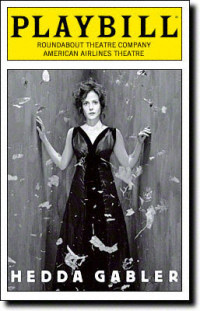
Reviews
Hedda Gabler received mixed reviews upon opening, with many critics questioning the choices made by Rickson, as well as the new translation of the classic piece. Most critics however found fault with Parker’s portrayal of Hedda, ruining any form of emotional or psychological climax.
• With this “Hedda” it’s not just that everyone is bad. It’s that they’re all bad in their own, different ways.
-Ben Brantley, New York Times
• It turns one of the most compellingly complicated women in modern drama into just another petulant, tantrum-throwing narcissist who could be stomping around the swanky apartments, velvet-rope nightclubs and high-end boutiques of any banal rich-bitch TV show.
-David Rooney, Variety
• At a recent preview, some in the audience laughed at points that had never, in previous revivals, seemed intentionally funny or ironic.
-Elysa Gardner, USA Today
• The problems start with Mary-Louise Parker’s hyper-neurotic performance of the title character. The actress is feverishly upset from the get-go, giving her little room to ratchet up the resentment over the course of the play…
-Michael Kuchwara, AP
• Unlike the elegance he brought to Chekhov’s “The Seagull” earlier this season, Ian Rickson’s production is a disjointed, disappointing mess marked by uneven performances and bewildering choices that contradict the original text.
-Matt Windman, am New York
• Given much of her past work, one might expect Parker’s Hedda to be the supreme neurotic. Not even close.
-Brian Scott Lipton, Theatermania
• The Connecticut playwright has sought to modernize Henrik Ibsen’s 1890 portrait of the unhappy wife of a narrow-minded academic. But this effort undercuts the values of the play, which very definitely belongs to the 19th century, Bacchus vine leaves and all.
-Malcolm Johnson, Hartford Courant
• There are moments when Parker’s charm and talent keep Hedda afloat, but all too often she drowns in misdirection. Already at curtain rise, she wakes up in a skimpy nightgown on a bed under an inclining mirror, as if she were Miss January after a night of revelry at the Playboy mansion.
-John Simon, Bloomberg
***
Final Performance on Sunday, March 29th, 2009
Roundabout Theatre Company's (Todd Haimes, Artistic Director) limited engagement of Hedda Gabler will play its final performance on Sunday, March 29th at 2:00 PM. Mary Louise Parker, Michael Cerveris, Paul Sparks and Peter Stormare star in this revival directed by Ian Rickson, featuring a new adaptation by Christopher Shinn, at the American Airlines Theatre (227 West 42nd St).
Hedda Gabler began previews on January 6th and opened officially on January 25th. When the limited engagement ends on March 29th, it will have played 21 preview performances and 74 regular performances.

More Background On HeddaOnBroadway.com
HeddaOnBroadway.com is a reconstructed archival website dedicated to preserving the memory of the 2009 Broadway revival of Hedda Gabler, produced by the Roundabout Theatre Company and staged at the American Airlines Theatre in New York City. Originally launched as the official promotional website for the limited engagement, the domain later lapsed, was briefly repurposed for unrelated content, and was subsequently reacquired and rebuilt with selective archived material.
Today, the website operates as a curated digital time capsule rather than a commercial theatre site. It presents production information, cast biographies, critical excerpts, scheduling details, and contextual commentary centered exclusively on the 2009 staging. In doing so, HeddaOnBroadway.com serves both as a record of a specific Broadway revival and as an example of digital preservation in an era when theatrical marketing sites frequently vanish once a production closes.
This article provides a detailed and structured overview of the website, the production it documents, its ownership context, its reception, its cultural significance, and its place within both Broadway history and online archival practice.
Origins and Purpose of the Website
The original HeddaOnBroadway.com was created as the official marketing website for the 2009 Broadway revival of Hedda Gabler. Like most Broadway production sites of the era, its function was promotional: providing cast listings, ticketing information, production credits, press quotes, performance schedules, and background on the play.
After the limited engagement ended in March 2009, the production closed and the site eventually disappeared. At some point, the domain became available and was reportedly repurposed for unrelated content. Recognizing the cultural value of preserving the theatrical record, a subsequent purchaser reacquired the domain and reconstructed the site using archived material sourced from web archives and historical snapshots.
The rebuilt version makes clear that it contains selective archived content and may not fully replicate the original site. That transparency positions the site not as an official Roundabout property, but as an independent preservation effort.
Ownership of the current iteration appears to be private rather than institutional. It is not operated by Roundabout Theatre Company, nor does it function as a ticketing portal or active theatrical platform. Instead, it exists as a memorialized production archive.
The 2009 Broadway Revival: Context and Creative Ambition
The revival officially opened on January 25, 2009, after 21 preview performances, and ran through March 29, 2009. It was directed by Ian Rickson and featured a new adaptation by Christopher Shinn.
The production starred Mary-Louise Parker in the title role, alongside:
- Michael Cerveris as Jørgen Tesman
- Paul Sparks as Ejlert Løvborg
- Peter Stormare as Judge Brack
- Ana Reeder as Mrs. Elvsted
- Helen Carey as Miss Juliane Tesman
Roundabout Theatre Company had built a strong reputation for presenting modern reinterpretations of classic works. Rickson, who previously directed a successful Broadway production of The Seagull, brought a contemporary psychological approach to Ibsen’s text. Shinn’s adaptation sought to modernize the dialogue while retaining the structural intensity of the original.
Expectations were high. Parker was a Tony Award winner and Golden Globe recipient with strong name recognition from both stage and television. Rickson’s association with London’s Royal Court Theatre further elevated anticipation among critics and theatre insiders.
Historical Background: Henrik Ibsen’s Hedda Gabler
The original playwright, Henrik Ibsen, wrote Hedda Gabler in 1890. It premiered in Munich in 1891 and soon after in London. The play is widely considered a cornerstone of modernist drama and one of the earliest psychological character studies centered on a female antihero.
Hedda Tesman (née Gabler) is portrayed as aristocratic, intelligent, restless, and deeply dissatisfied with the limitations imposed upon her by marriage and social expectation. Her manipulation of Ejlert Løvborg, destruction of his manuscript, and ultimate suicide have made the role one of the most challenging in theatre history.
The 2009 revival positioned itself within this long interpretive lineage, attempting to render Hedda’s neurosis and desire for control through a modern sensibility.
The Venue: American Airlines Theatre
The revival was staged at the American Airlines Theatre, located at 227 West 42nd Street between Seventh and Eighth Avenues in Manhattan’s Theater District.
Originally opened in 1918 as the Selwyn Theatre, the building was restored and reopened in 2000 as a Broadway home for Roundabout Theatre Company. With approximately 740 seats, the venue offers an intimate setting well suited to psychologically intense productions.
Its proximity to Times Square, Bryant Park, and other major Broadway houses places it at the heart of New York’s commercial theatre ecosystem. The architectural restoration of the space reflects Roundabout’s broader mission of preserving theatre history while producing contemporary work.
Performance Schedule and Ticketing
The limited engagement ran from January 6 through March 29, 2009. Performances were typically scheduled Tuesday through Saturday evenings at 8:00 PM, with matinees on Wednesday, Saturday, and Sunday at 2:00 PM. Pricing ranged roughly between $66.50 and $111.50, consistent with Broadway ticket costs at the time for high-profile limited engagements.
When the production closed, it had completed 21 preview performances and 74 regular performances.
Critical Reception and Press Coverage
One of the most notable aspects of the 2009 revival — and prominently documented on HeddaOnBroadway.com — is its mixed critical reception.
Among the critics who reviewed the production were:
- Ben Brantley (The New York Times)
- David Rooney (Variety)
- Elysa Gardner (USA Today)
- Michael Kuchwara (Associated Press)
- Matt Windman (am New York)
- Brian Scott Lipton (TheaterMania)
- Malcolm Johnson (Hartford Courant)
- John Simon (Bloomberg)
Many critics questioned the adaptation and directorial choices. Some felt the modernization undercut Ibsen’s 19th-century context. Others found Parker’s portrayal overly neurotic from the outset, leaving little room for escalation.
However, even negative reviews acknowledged the boldness of the attempt. The revival generated significant media attention precisely because it dared to reinterpret a canonical text.
HeddaOnBroadway.com includes excerpts from these reviews, creating a documentary record of the production’s reception rather than attempting to sanitize it.
Design and Creative Team
The production’s design team included:
- Hildegard Bechtler (Set Design)
- Ann Roth (Costumes)
- Natasha Katz (Lighting)
- John Gromada (Sound)
These designers brought significant Broadway and international credentials to the production. Their involvement reinforced the revival’s seriousness and artistic ambition.
Audience and Cultural Impact
The primary audience for the original production included:
- Broadway subscribers
- Theatre critics and industry professionals
- Fans of Mary-Louise Parker
- Students and scholars of modern drama
- General Broadway tourists seeking high-profile limited engagements
The revival did not achieve major award recognition, nor did it extend beyond its scheduled run. However, its cultural significance lies in its attempt to reinterpret Ibsen through a contemporary lens during a period when Broadway programming often leaned toward commercial musicals.
The production contributed to ongoing debates about modernization of classic texts — a recurring tension in theatrical discourse.
Digital Preservation and Domain Reclamation
HeddaOnBroadway.com’s most distinctive feature today is its status as a reclaimed domain. Broadway marketing websites are typically temporary. Once a production closes, domains expire, hosting ceases, and promotional materials disappear.
By reacquiring and reconstructing the domain, the current owner prevented the name from being permanently detached from its theatrical origin. This reflects a broader issue in digital preservation: commercial theatre history is often less systematically archived than institutional or nonprofit performance records.
The reconstructed site functions as:
- A preservation archive
- A historical reference
- A nostalgic portal for those who saw the production
- A case study in domain reclamation
Its tone suggests both affection for the original production and awareness of its imperfections.
Popularity and Traffic Considerations
As a niche archival site, HeddaOnBroadway.com likely attracts modest but targeted traffic. Potential visitors include:
- Theatre historians
- Drama students researching revivals
- Fans of Mary-Louise Parker
- Individuals exploring Ibsen productions
- SEO professionals analyzing reclaimed domains
Its popularity is not measured in mass engagement but in cultural specificity. It occupies a small but meaningful corner of theatrical internet history.
Cultural and Social Significance
The cultural significance of HeddaOnBroadway.com lies in three overlapping areas:
- The preservation of a specific Broadway revival.
- The documentation of critical discourse surrounding reinterpretations of classic texts.
- The reclamation of digital real estate for historical rather than commercial purposes.
In a theatre ecosystem dominated by short runs and fast turnover, preserving a production website becomes an act of cultural stewardship.
HeddaOnBroadway.com is more than a promotional relic. It is a reconstructed digital archive dedicated to the 2009 Broadway revival of Hedda Gabler produced by Roundabout Theatre Company. By preserving cast listings, creative credits, performance history, and critical responses, the site ensures that this brief but ambitious revival remains accessible to future audiences.
While the production itself received mixed reviews and concluded after its limited engagement, its afterlife through the website underscores a powerful truth: in the digital era, theatrical memory can endure — if someone chooses to preserve it.